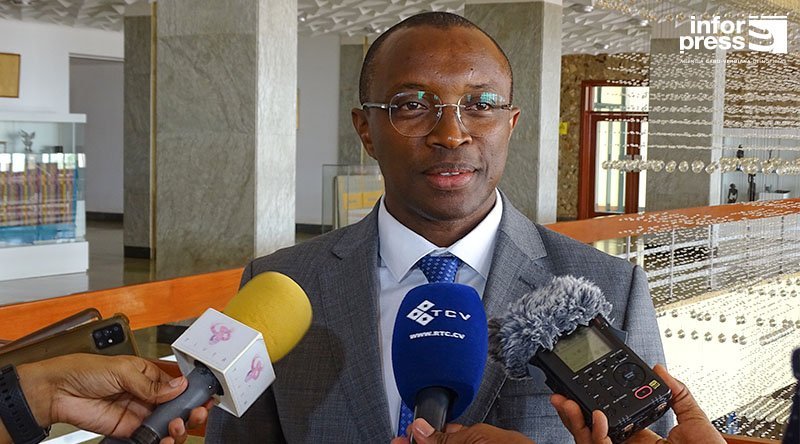


Controversy over the stripping of Senegal the Africa Cup of Nations 2025 title and awarding the hosts and losing finalists Morocco continues unabated with renewed scrutiny after Appeal Jury Vice-President Faustino Varela Monteiro publicly broke ranks with the decision.
Speaking in comments reported by Senegal’s L’Observateur, Monteiro expressed strong disagreement with the governing body’s position, warning that it risks undermining established principles within football governance.
His remarks add to growing tension around the handling of matters linked to the tournament awarded to Morocco.
Monteiro’s criticism centres on what he describes as a fundamental procedural flaw. He argued that revisiting facts established during matches represents a significant departure from accepted rules, particularly those governing officiating authority.
“I strongly disagree with the decision. The facts described in the match officials’ reports are presumed to be true and accurate until proven otherwise. If discrepancies arise, the referee’s report takes precedence on the field.”
“I am in profound disagreement with the decision. (…) I cannot subscribe to the interpretation that prevailed in this decision (…) when the referee allows the match to continue and reach its conclusion, it seems to me that this confirms there was no abandonment. As a result, for a disciplinary body to decide otherwise is a break with the spirit of the sport. On the other hand, if the outcome of a match can be changed after the fact, then the very idea of a final decision loses all meaning. (…) The CAS will not review an on-field decision unless there is compelling evidence of arbitrariness or bad faith in that ruling.” he told daily newspaper L’Observateur.
By highlighting the primacy of officiating reports, Monteiro underscored what he sees as a core principle of football regulation.
According to his interpretation, any attempt to override these reports could weaken the institutional framework that governs the sport.
He further warned that such a decision might not withstand scrutiny beyond the continent’s football structures.
Referring to the Court of Arbitration for Sport, Monteiro suggested that the case could prove vulnerable if challenged at an international level.
“The CAS will not review a decision made on the ground unless there is evidence of arbitrariness or bad faith, even if the decision appears erroneous in retrospect.”
His intervention raises questions about the stability of the ruling and its potential implications for CAF’s credibility.
While the governing body has maintained its stance, the public dissent from within its own appeals structure highlights divisions over how such cases should be handled.
As the situation develops, attention is likely to remain focused on whether the decision will face further legal examination and how CAF will respond to internal criticism at a time of heightened scrutiny.