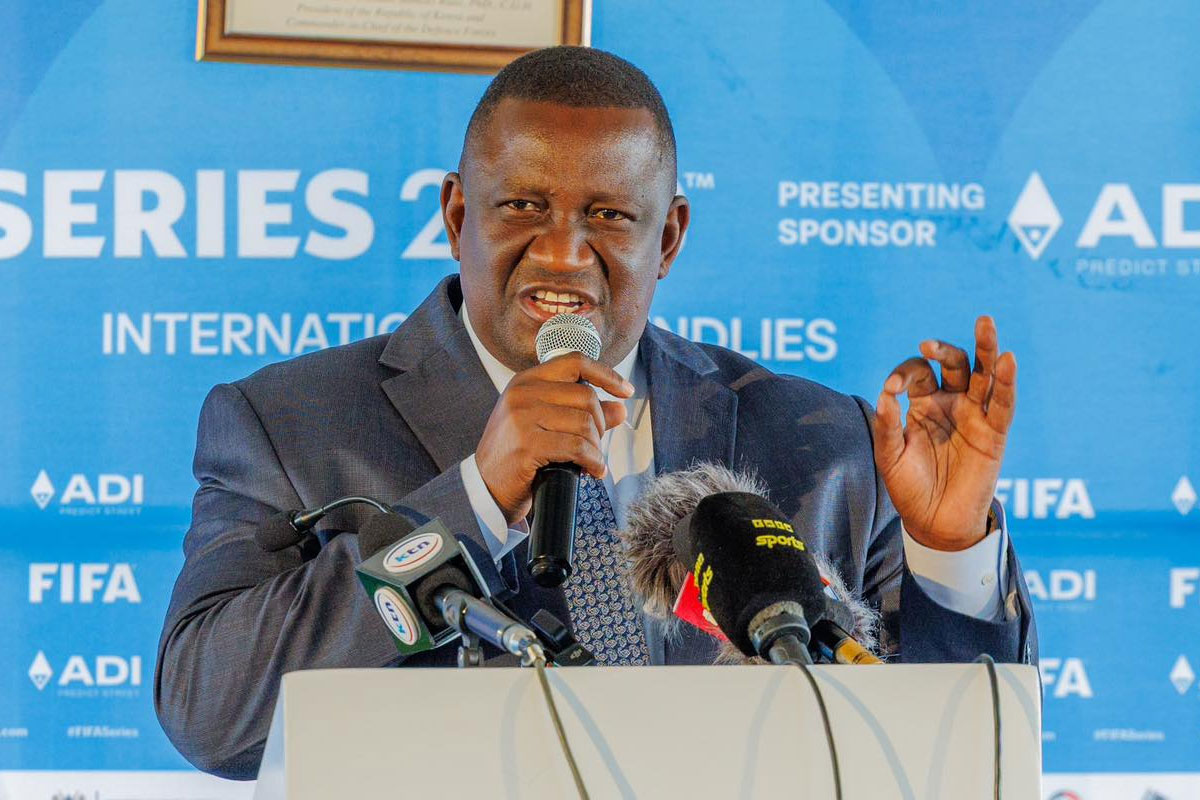


Kenya has stepped up its preparations to co-host the Africa Cup of Nations 2027, with the government reaffirming its commitment to deliver a world-class football spectacle alongside regional partners Uganda and Tanzania under the Pamoja bid.
Government Secures Funding and Coordination
Speaking in Nairobi, Cabinet Secretary for Sports Salim Mvurya confirmed that the government is working with the National Treasury and the Parliamentary Committee on Sports to secure the KSh 3.9 billion hosting fee required by the Confederation of African Football.
The funding forms part of a broader “whole-of-government” approach aimed at ensuring Kenya meets both financial and operational obligations in time for the tournament.

Mvurya reassured stakeholders that Kenya remains fully compliant with CAF requirements:
“We are meeting both our financial obligations and infrastructure requirements. Our preparations are on track.”
Key Stadiums and Infrastructure Upgrades
Kenya’s hosting duties will largely depend on the successful upgrade and delivery of key stadiums and training facilities. Among the venues earmarked for renovation and modernization are:
- Moi International Sports Centre, Kasarani – expected to serve as the main venue, including hosting high-profile matches and possibly the opening ceremony.
- Nyayo National Stadium – undergoing refurbishment to meet CAF standards.
- Kipchoge Keino Stadium – targeted as a key training and match venue.
The government has also prioritized improvements in transport infrastructure, accommodation, security, and training grounds to align with international tournament standards.

FKF President Hussein Mohamed
CAF Inspections and Progress Assessment
Kenya recently invited officials from the Confederation of African Football to conduct inspection visits as part of ongoing readiness assessments. These inspections are critical in determining whether the host nations are meeting timelines and infrastructure benchmarks.
Mvurya noted that the decision to invite CAF early demonstrates transparency and confidence:
“We want CAF to assess our readiness firsthand. We are confident in the work we are doing.”
Regional Collaboration Under the Pamoja Bid
AFCON 2027 will mark a historic moment as three East African nations will co-host it for the first time. The joint bid—popularly known as the “Pamoja Bid”—aims to:
- Strengthen regional integration
- Boost tourism and investment across East Africa
- Enhance sporting infrastructure in all host countries
This collaboration positions East Africa as an emerging hub for major international sporting events.

Talanta Stadium – Nairobi
Economic and Sporting Impact
Hosting AFCON 2027 is expected to deliver significant economic benefits, including:
- Increased tourism and hospitality revenue
- Job creation in construction, security, and event management
- Growth of local football and youth development programs
For Kenyan football, the tournament presents a major opportunity for the national team, Harambee Stars, to compete on home soil and inspire a new generation of players.
Challenges and Timelines
Despite the progress, Kenya still faces key challenges:
- Timely completion of stadium renovations
- Efficient disbursement of funds
- Coordination between national and county governments
CAF is expected to continue monitoring progress through periodic inspections through 2027.
Outlook
With strong political backing and regional cooperation, Kenya is positioning itself to play a central role in delivering a successful AFCON tournament. The coming months will be crucial as infrastructure projects accelerate and CAF evaluates readiness.
If timelines are met, AFCON 2027 could become a landmark sporting event for East Africa—showcasing not just football excellence, but the region’s growing capacity to host global competitions.