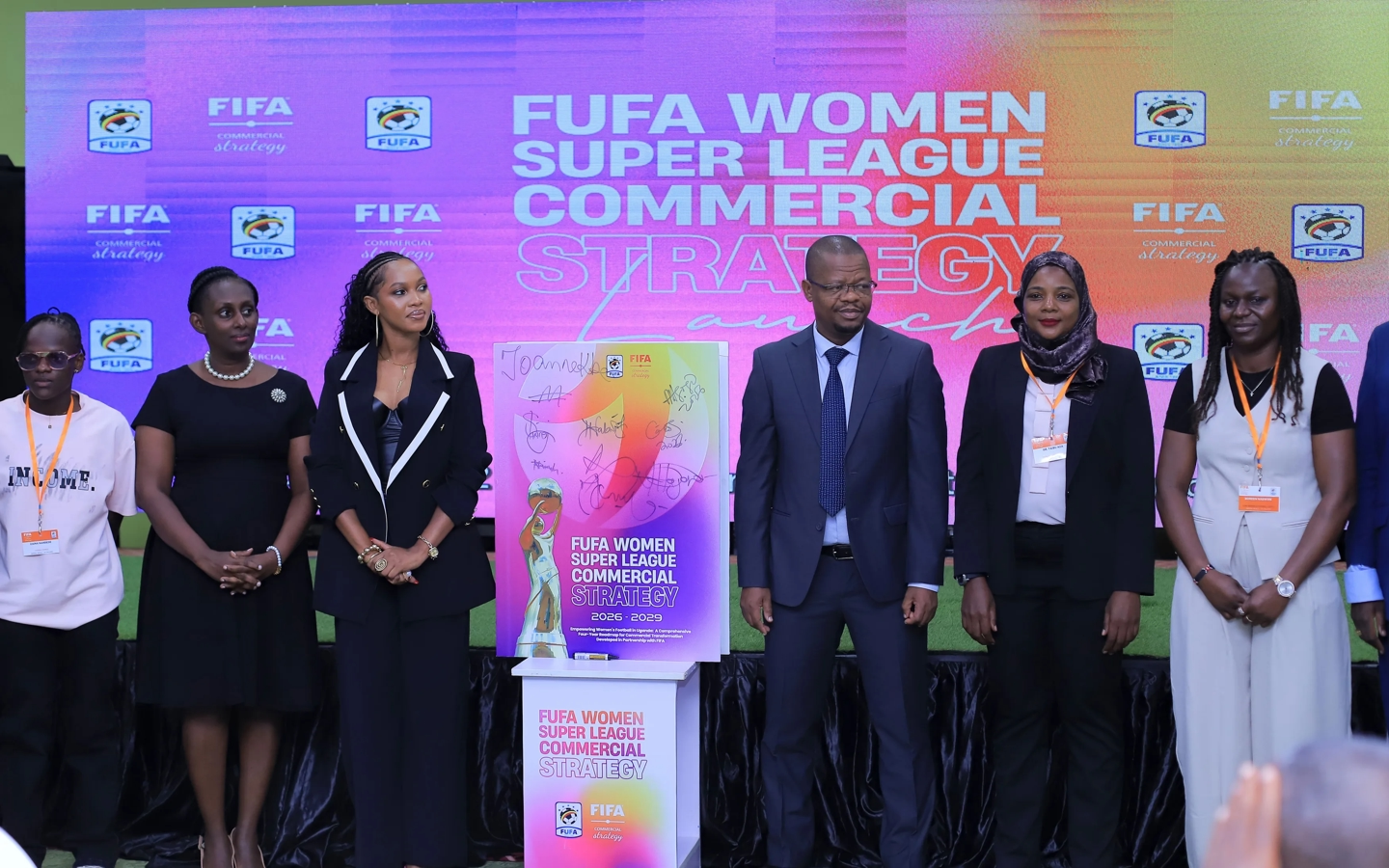
Uganda has launched commercial strategies hoping to turbocharge women’s football in the country.
With support from World Soccer governing body FIFA, Uganda launched the FUFA Women Super League Commercial Strategy to an audience of around 150 attendees in the capital Kampala.
The initiative aims to strengthen commercial structures, enhance elite competitions and establish talent development pathways from grassroots to Super League level. The strategy seeks to unlock investment opportunities, professionalise clubs and improve player welfare while supporting governance reforms and leadership development for women across football.
During the launch, sustainable commercial development was the underlying focus
It is the latest in a series of FIFA support for women’s football in the East African nation. All 12 FUFA Women Super League clubs received medical and technical equipment last year via the FIFA’s League Development Programme, while strongly supported FIFA Women’s Football Campaigns took place in early 2025.
“Today, parents and communities have accepted that a girl child can play football, access education and even earn a living through the game. Our focus now is to professionalise women’s football, strengthen clubs and ensure sustainable investment that allows our players to reach their full potential,” said the Hon. Moses Magogo Hassim, FUFA President.
Speaking at the launch, Solomon Mudege, FIFA Head of Development Programmes – Africa added: “We are proud of what FUFA has achieved and we take it as a challenge to support it further. The progress we have seen in infrastructure, governance and women’s football development reflects strong leadership and commitment. This commercial strategy presents an opportunity to unlock the potential of women’s football in Uganda and create clear pathways from grassroots to elite level.”
Simon Toselli, Regional Lead, Asia and Oceania, Women’s Football division, said the programme sets out a pathway for women’s leagues around the world to reach the next level. “FIFA created a dedicated programme to support its Member Associations in developing a commercial strategy for their women’s football competitions, enabling them to better monetise their rights and reach financial sustainability,” he said.
“We conducted these two pilot projects to test the approach in practice and derive key learnings. Both MA’s [Romania and Uganda] showed a high level of commitment, preparation and engagement to reinforce their commercial strategy. They organised a successful onsite strategy launch, gathering key stakeholders, media and sponsors.”