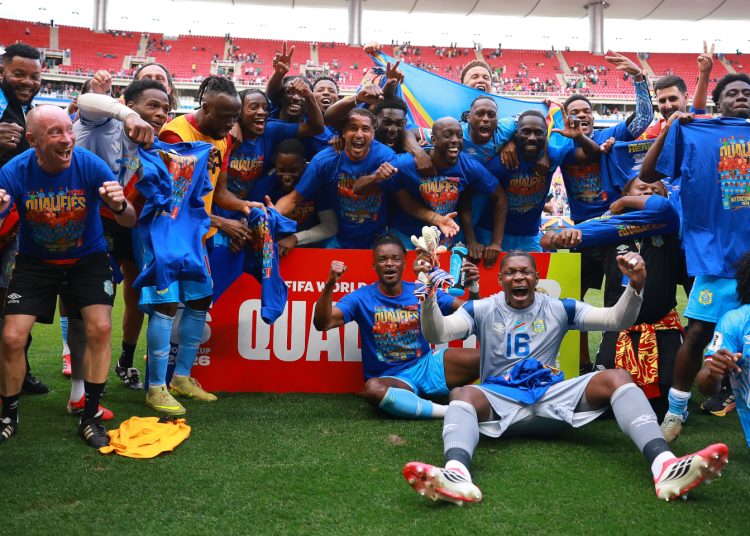


The Democratic Republic of Congo qualified for their first World Cup in 52 years with a 1-0 win over Jamaica in their intercontinental play-off final at the Guadalajara Stadium in Mexico.
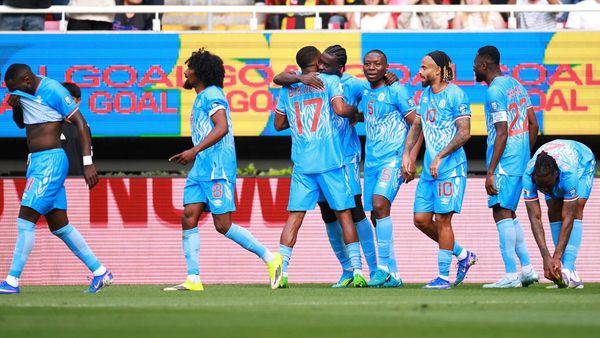
Former Manchester United defender Axel Tuanzebe netted the only goal in the first half of extra time to settle the tie after a tense affair in normal time.
The former England under-21 international bundled the ball over the line from a corner in the 100th minute, but had to wait for more than a minute while it was checked for a possible handball before being confirmed as a goal.
“We made it very difficult for ourselves, perhaps the occasion got the better of us,” said Tuanzebe, who now plays his club football for Burnley in the English Premier League.
“To score the winning goal for your country… This is what every player dreams of
“I am so proud of what I could do for the country, I’m so proud of the country, and now it is time to celebrate.”
It was as much as the Congolese deserved, having dominated proceedings in a fast-flowing match, albeit without many clear-cut chances at Estadio Guadalajara, which will be one of the three Mexican venues for the World Cup.
The victory means there will be 10 teams from Africa lining up at the 2026 edition of football’s showpiece event.
In the build-up, Tuanzebe told the BBC the game was the biggest of his career and the former England youth international, who was born in Bunia – a city affected by the ongoing conflict in eastern DR Congo – has now written his name into Congolese football history.
While Leopards striker Cedric Bakambu twice had goals correctly ruled out for offside during normal time, it was no surprise that a tight encounter needed the extra 30 minutes to settle things.
And it was Tuanzebe who was in the right place at the right time, using his torso to almost run the ball into the goal after Brian Cipenga’s in-swinging corner took a nick off the top of Jamaica defender Joel Latibeaudiere and cannoned into the onrushing Burnley man in the 100th minute.
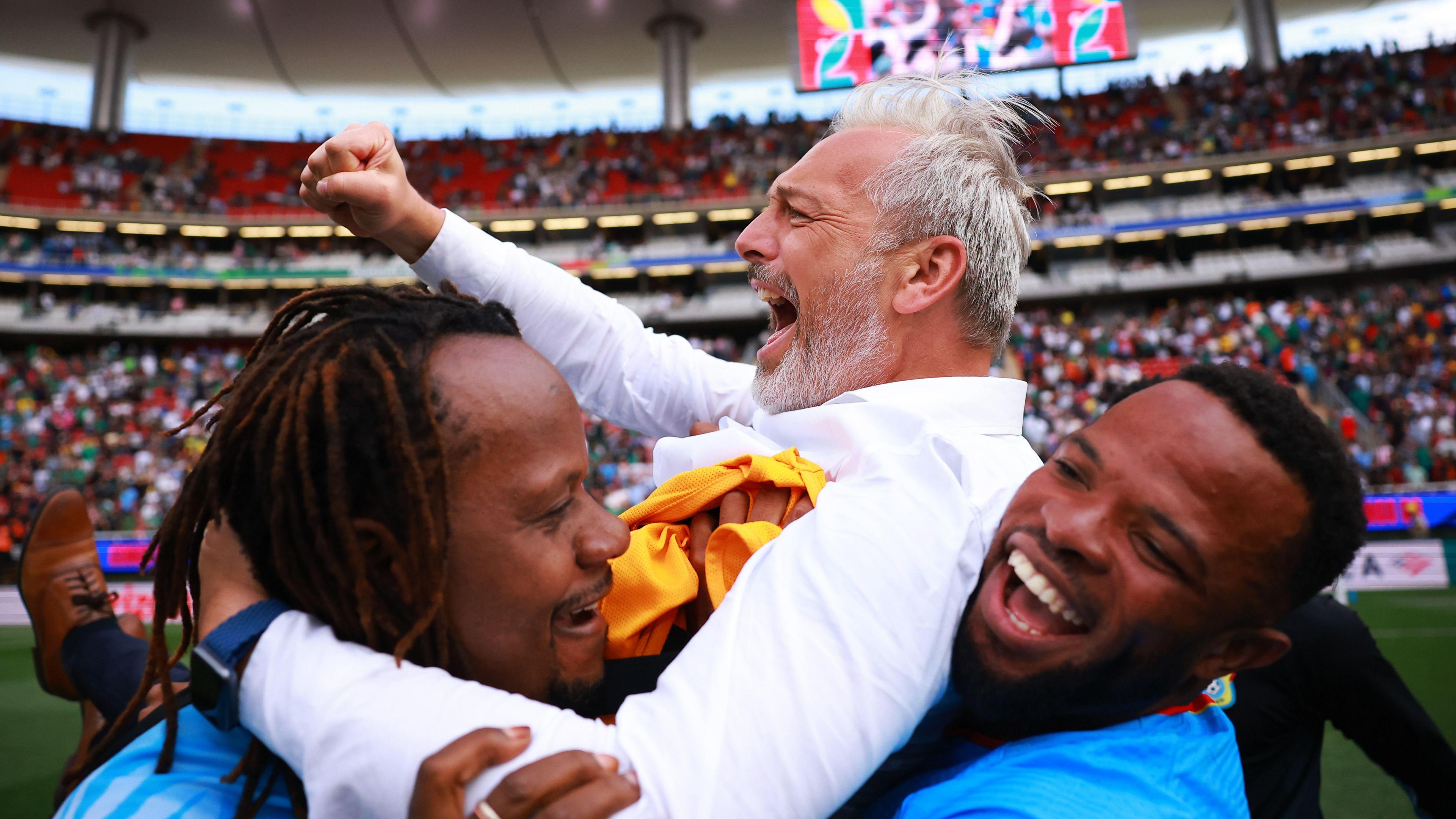
Sebastien Desabre was appointed in August 2022 and given the target of getting DR Congo into the 2026 World Cup-GETTY IMAGES
Celebrations were paused temporarily while the officials checked for a potential handball, but the video assistant referee (VAR) eventually decided the ball had not brushed Tuanzebe’s arm.
Jamaica were hoping to reach their second World Cup, having played at France 1998, but failed to carve out any real opportunities for an equaliser.
Instead, it is DR Congo who take their place in Group K at the expanded 48-team tournament, facing Portugal in their opening match in Houston on 17 June before ties against Colombia and Uzbekistan.
The DRC defeated Nigeria in a playoff at the end of the Confederation of African Football (CAF) qualifier to reach the intercontinental stage.
Jamaica beat New Caledonia on Thursday in their intercontinental pathway to reach this stage, while DRC’s ranking – as one of the African sides – meant they were placed straight into the final.
They have only once previously reached the finals – in 1974 as Zaire. Similarly, Jamaica have only reached the finals in 1998 in France.
The DRC will now join the World Cup group of Portugal, Colombia and Uzbekistan, playing the former in their opening game.
Congo fans have been waiting a long time to right the wrongs of their solitary World Cup campaign in 1974.
Back home, 110 million people – as well as a huge global diaspora – will now pray things gorld Cup campaign o better this time than they did in West Germany, when their country competed as Zaire.
That campaign ended with three defeats, 14 goals conceded and none scored.
As well as a 9-0 loss to Yugoslavia, the game against holders Brazil created one of the World Cup’s oddly iconic moments, when right-back Mwepu Ilunga charged out of the defensive wall and booted the ball downfield as Brazil lined up a free-kick.
Ilunga received a yellow card, but the damage done to African football’s reputation was more severe, creating an impression that players from the continent did not even know the rules.
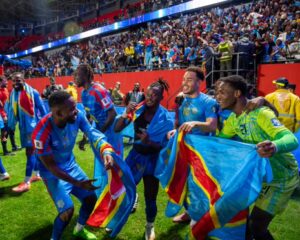
Tuanzebe and his team-mates now have the chance to banish those ghosts.
After the game, the 28-year-old, who only made his debut in June 2024, told Fifa he was “so proud of what I could do for the country”, while also saying his father and brother were watching in the stands.
He is far from the only player Congo have persuaded to join their ranks after playing youth football for another country. In fact, like many other African nations, tapping into diaspora talent has been a specific tactic.
Former captain Gabiel Zakuani is one of those tasked with sweet talking players and their families into signing up, including both Tuanzebe and West Ham’s Aaron Wan-Bissaka, another who only recently made the switch from England.
With Desabre having been in place since August 2022, the Leopards, who reached the semi-finals of the 2023 Africa Cup of Nations under the Frenchman’s guidance, now benefit from continuity and stability as they look to bed in fresh talent born overseas.
There is also the added motivation of playing for a population starved of success and battered by decades of conflict and corruption.
Fifty-two years is a long time to wait, but finally a new generation will have their shot at World Cup glory.