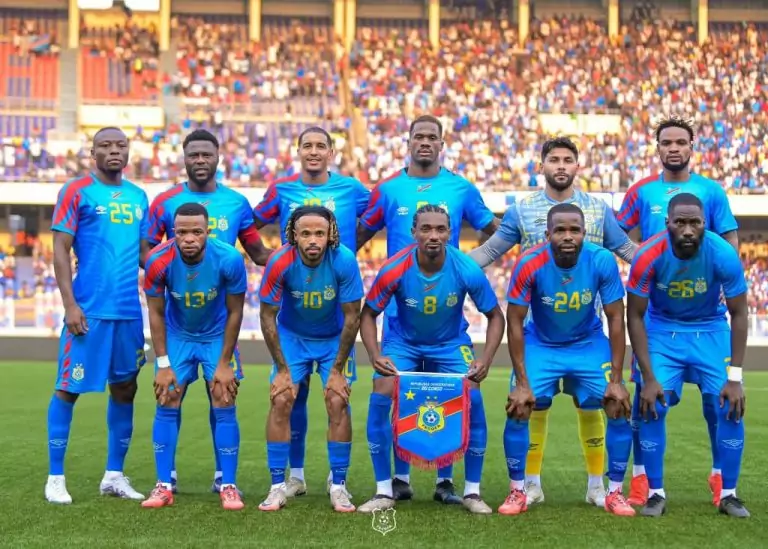


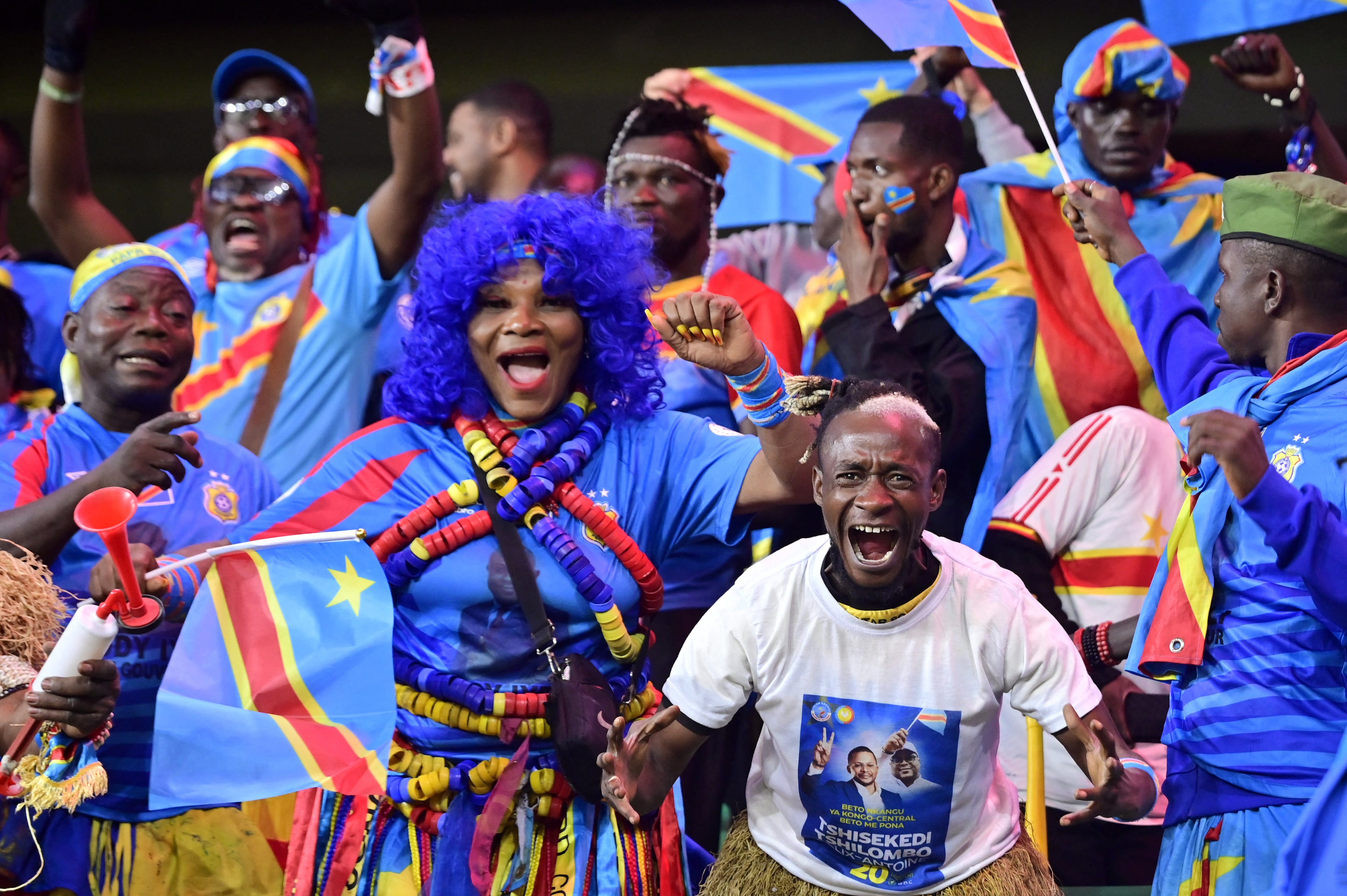
DR Congo stand on the brink of history as they bid to secure their first FIFA World Cup appearance since 1974 when they face Jamaica in the inter-continental play-off final at the Estadio Akron on Tuesday, 31 March.
Football fans in the Democratic Republic of Congo have been waiting a long time to right the wrongs of their solitary World Cup campaign in 1974.
Victory for the Leopards in Tuesday’s intercontinental play-off final against Jamaica will end that 52-year wait and guarantee Africa a 10th representative at this year’s tournament in Canada, Mexico and the USA.
Head coach Sébastien Desabre is closing in on a long-term ambition set upon his appointment three and a half years ago, having steadily rebuilt the Leopards into continental contenders.
The Frenchman made an immediate impression following the 2022 tournament in Qatar, guiding the side to a commendable fourth-place finish at the 2023 Africa Cup of Nations.
Although their AFCON 2025 campaign ended in a round-of-16 exit, DR Congo have remained firmly focused on the ultimate prize — qualification for the global showpiece to be staged across Canada, Mexico and the United States. Their route to the play-offs has been hard-fought.
The Central Africans narrowly missed out on automatic qualification, finishing just two points behind Senegal in Group B after recording seven wins, one draw and two defeats.
They responded strongly in the next phase, edging regional rivals Cameroon 1-0 in the semi-finals before overcoming Nigeria 4-3 on penalties in a dramatic final. A 2-0 victory over Bermuda on 25 March provided timely preparation ahead of the decisive clash in Zapopan. Jamaica, however, poses a formidable challenge.
Speaking ahead of the encounter, Desabre underlined both the belief and unity within his squad.
“We’re fully focused and determined. We are still on course to achieve the objective we set when I took charge,” Desabre said.
“This will be our 13th match in the qualifying campaign, and the players have shown tremendous commitment throughout. “We are fortunate to have quality players competing at top clubs, but more importantly, the entire group has embraced the project. There is a strong collective spirit.
“We defend and attack as one — everyone contributes. That unity gives us the strength to make life difficult for any opponent. ”With a place at the 2026 FIFA World Cup at stake, DR Congo now have one final hurdle to clear as they aim to end a 56-year wait for a return to football’s biggest stage.
Should DR Congo win, over 110 million people back home, as well as a huge global diaspora, will pray things go better this time than they did in West Germany, when their country competed as Zaire.
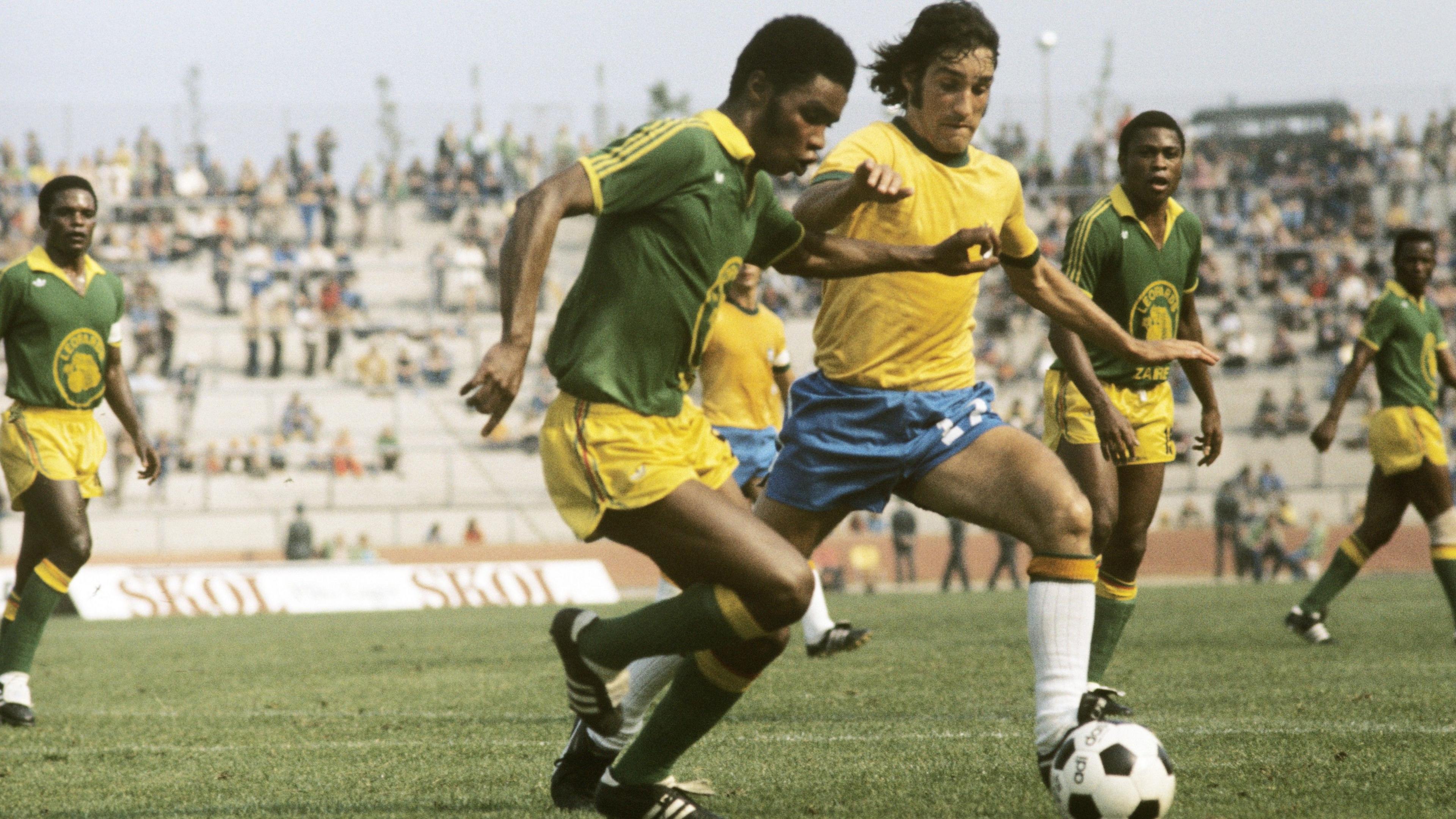
DR Congo competed as Zaire at the 1974 World Cup, losing all three matches including a 3-0 defeat to holders Brazil
That campaign kicked off poorly with a 2-0 defeat against Scotland, careened off the tracks in a 9-0 humiliation against Yugoslavia and descended into farce during a 3-0 loss to Brazil which produced one of the World Cup’s most memorable moments.
Not in a good way.
“What on Earth did he do that for?” was the question posed by BBC commentator John Motson when right-back Mwepu Ilunga charged out of the defensive wall and booted the ball downfield as Brazil lined up a free-kick on the edge of the Zaire penalty area.
Ilunga received a yellow card, but the damage done to African football’s reputation was more severe, creating an impression that players from the continent did not even know the rules.
“We were not a bad team,” Mohamed Kalambay, one of the goalkeepers in the 1974 squad, told BBC Sporting Witness in 2022.
“When you look at the teams in Africa, there are just a few that have been to the World Cup, but we were there and we deserved it.”
Darker reasons have been suggested for Ilunga’s moment of madness and the team’s underperformance, ranging from unpaid bonuses to threats of violence.
Now a new generation hope to create their own iconic moments to banish those ghosts.
Victory against Jamaica will see them join a group containing Portugal, Uzbekistan and Colombia.
“The aim is to also compete and put on a good show,” said former captain Gabriel Zakuani who has labelled the game “the biggest game in our history” adding that it is the aim to be at the world cup is “not just be participants, not just be happy to be part of the party, but also to create history”.
When they qualified in 1974, Zaire were only the third African side to reach the World Cup after Egypt (1934) and Morocco (1970).
Since then this huge, resource-rich nation – Africa’s second largest by area and fourth by population – has been forced to watch enviously as smaller rivals such as Ghana, Senegal and Tunisia have made multiple appearances at global football’s showpiece.
The explanation comes in the form of corruption, political instability and war – constants since the end of Belgium’s extractive colonial rule in 1960.
The 1974 side, who were also reigning Africa Cup of Nations (Afcon) champions, were backed by President Mobutu Sese Seko, the iron-fisted dictator who ran the country from 1971 to 1997, using his power to amass a huge personal fortune, some of which he invested into football.
“We were at the presidency. We went to see him because he wanted to encourage us,” is how Kalambay remembered the man who gave each member of the Afcon-winning side a house and a car.
Congo have not been back to the Afcon final since.
“The impact over the last 50 years has been profound,” said sports journalist Jean-Jacques Akengelaka, who points to facilities which have been “destroyed” and “corruption and poor governance within sport”.
“Unlike other African countries, DR Congo has long lacked structured training centres, pitches, quality facilities and technical coaching.”
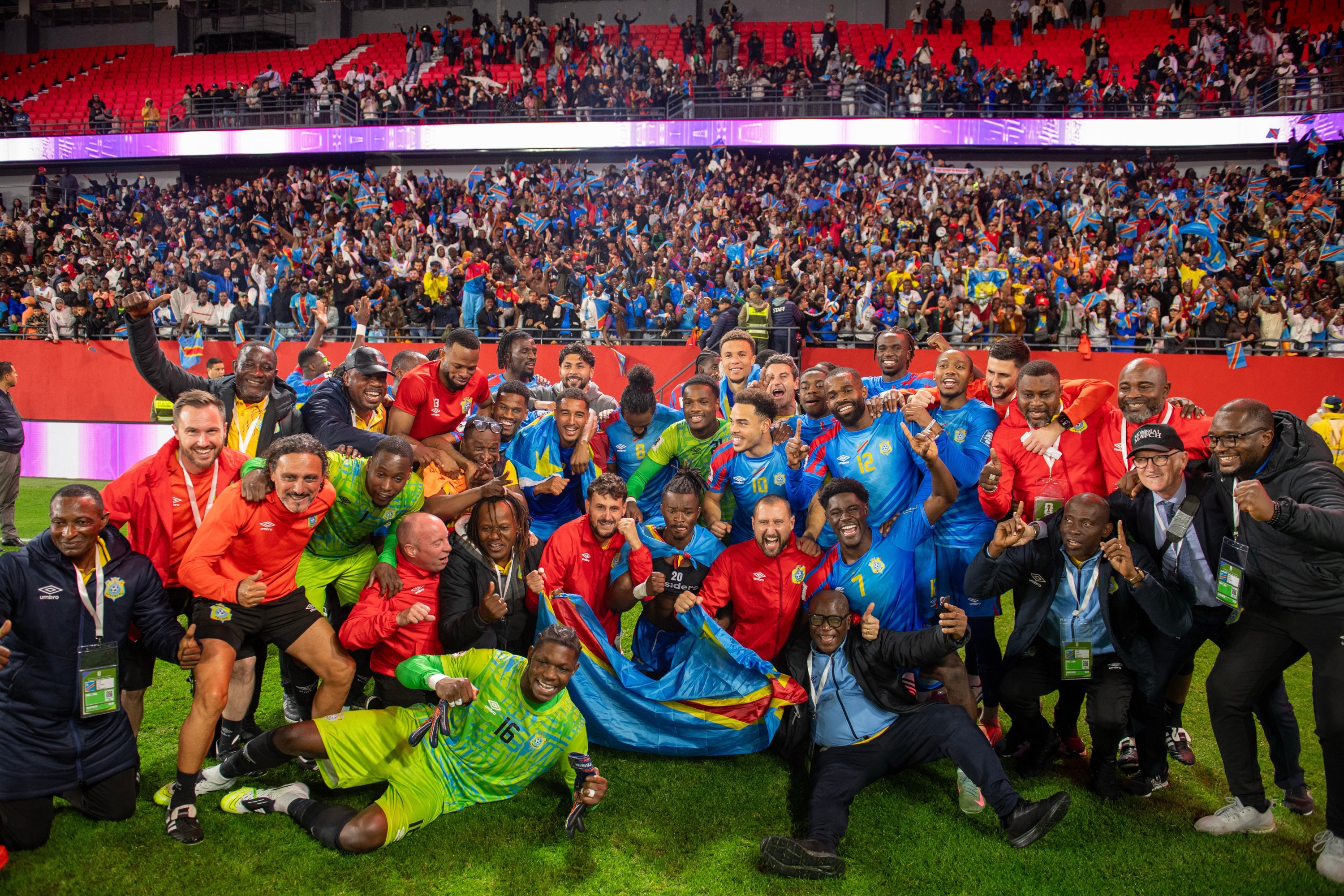
The Leopards reached Fifa’s intercontinental play-offs after finishing second behind Senegal in their qualifying group.
They then had to negotiate a four-team African play-off, beating Cameroon before overcoming Nigeria on penalties in the final.
Recruiting players from the diaspora has been key to the team’s success, both at Afcon and now in World Cup qualifying – a tactic deployed to good effect by other African nations including Cape Verde, who have already qualified for their maiden World Cup.
For example, both Tuanzebe and fellow defender Aaron Wan-Bissaka are former England youth internationals.
“I didn’t have any doubts. As soon as I joined, they welcomed me, accepted me, I was happy and everything’s been smooth ever since,” West Ham’s Wan-Bissaka told BBC Sport Africa at the recent Afcon in Morocco, where DR Congo exited in the last 16.
“It’s where my parents are from. I grew up in a Congolese household, and I was just proud to represent them.”

Of the current 26-man squad, 10 were born in head coach Sebastien Desabre’s home nation France, five in Belgium, two in Switzerland and one in England.
Eight were born in Congo, yet many spent their childhood in Europe.
Only two, midfielder Meschak Elia and forward Fiston Mayele, have played senior football for a Congolese club side.
“Many talented players have to go abroad at a very early age,” explained Akengelaka.
“There is unstable organisation, insufficient funding and little media coverage of competitions at national level.”
Additional reports from BBC